Adam Clifford
exhibition
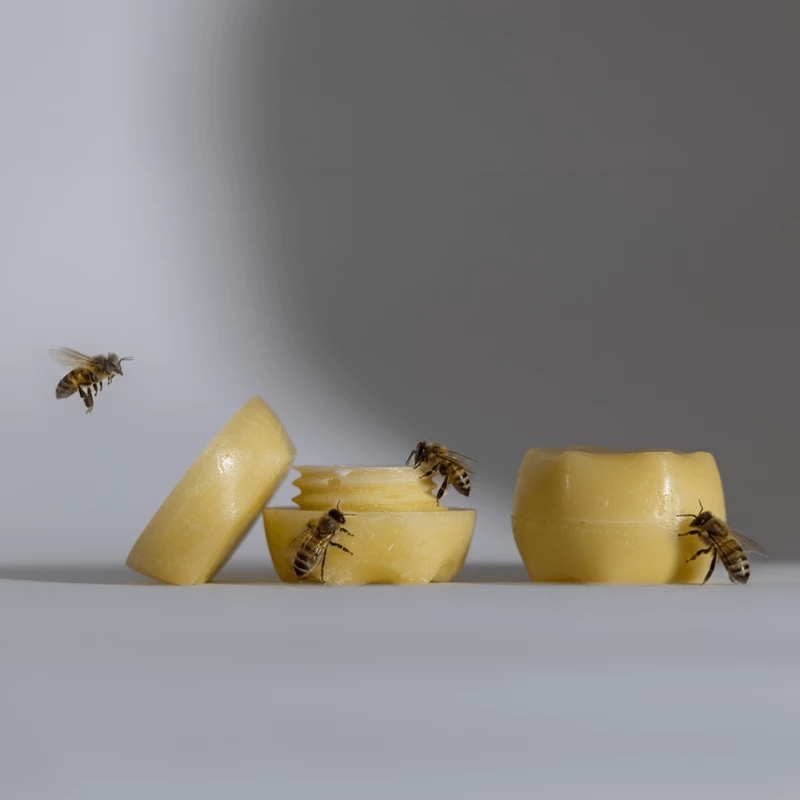
Mind Your Beeswax
Mind Your Beeswax started with the mindset of viewing materials not as something to own, but something to borrow. As we have seen with microplastics and ocean pollution, everything returns to the environment whether we want it to or not, either to sustain life or to degrade it. Beeswax works as an example of borrowing material because it is both fully compostable and fully recyclable. This means that you can harvest it, melt it, shape it, use it, remelt it, shape it, use it, and compost it without changing anything about it. This project explores the ways beeswax can go beyond the candle through three object typologies: lighting, tabletop, and cosmetic packaging. Each showing off some of beeswax’s remarkable capabilities.
DESIGNER
DATES
VENUE
exhibition
Nogu
The Nogu project, which stands for "no guilt", investigates the scalability of sustainable manufacturing using biological materials. The primary component of the lamp is mycelium, the root-like structure of fungi, which grows within a mold to form the shade. To make this unconventional material more approachable for a general audience, the designer utilized a recognizable geometric form and finished the surface with milk paint to soften its natural texture. Structurally, the lamp avoids the use of synthetic glues or permanent hardware. Wooden dowels are placed directly into the mold during the growth phase. This allows the mycelium to act as a natural adhesive that binds the components together as it matures. The base is constructed from reclaimed wood scraps, which further reduces the environmental footprint of the object. Beyond mycelium, the project explores other bio-based materials, including wheatgrass roots and sunflower seeds. These experiments demonstrate a "borrowed" material approach, where the components remain compostable or functional after the object's life cycle. The project provides a practical example of how circular design can produce affordable, functional, and fully biodegradable household items.
Roni
Roni introduces a sustainable alternative to the high volume of plastic waste in the toy industry. It consists of an open-ended building system designed for children aged four to five. The primary material is mycelium, the root structure of fungi, which acts as a natural binder for organic substrate. This material is biodegradable and can be composted at the end of its life cycle. The system includes mycelium blocks, wooden dowels, and connector blocks. These components allow for various configurations, encouraging creative play and spatial problem-solving. During development, the designer focused on the mechanical connections between the soft mycelium and the rigid wooden elements. The project addresses the environmental impact of the toy industry, where a large percentage of products are made from non-recyclable plastics. By using mycelium, the project demonstrates how biological materials can withstand daily use while remaining environmentally responsible. Roni serves as an educational tool, showing how design can integrate natural growth processes into manufacturing. The result is a durable, non-toxic toy that returns to the earth without leaving permanent waste.
DESIGNER
DATES
VENUE
About the designer
Adam Clifford is a product designer who focuses on the relationship between materials and intention. His work explores sustainable alternatives to industrial manufacturing. He investigates how organic materials, such as mycelium, can be integrated into functional objects to address environmental challenges and promote circular design practices.

Contact us
Gentler Futures Festival is a not-for-profit initiative by BY THE END OF MAY, a research and design studio exploring the roles of manufacturing and crafts in creating a (non-linear), (post-consumerism) and (anti-alienation) economy. If you are into open source design, distributed manufacturing, local making and regenerative materials, get in touch with us.
A project

Co-funded by

Official Partner

Institutional Partners

Academic Partner

International Partners
