Akir Hall
exhibition
Sumi Lantern
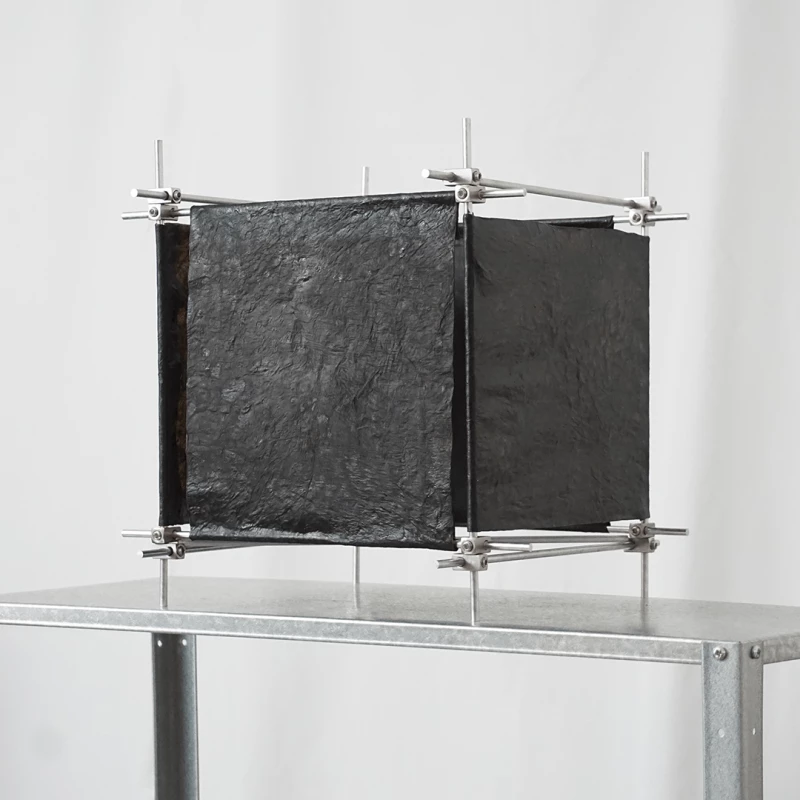
The Sumi Lantern is a bio-industrial table lamp that filters light through microbial skins. Each panel is grown and woven by bacteria, then dyed with natural Japanese calligraphy ink through a process called Sumizome. This technique highlights the material’s natural texture, making the panels appear opaque until illuminated.
The bacterial fabric is made from cellulose, the same fundamental substance found in paper and cotton, offering a familiar surface for the ink. Yet together, they create something unfamiliar, where ancient craft meets future biofabrication.
This approach treats heritage as a form of technology, using natural dyes to enhance microbial textiles. It draws on both past and future material practices to propose ways of designing more regeneratively.
DESIGNER
DATES
VENUE
About the designer
Akir Hall is a London-based biodesigner developing products grown with bacteria and fungi, blending artisanal craft with biotechnology. He exhibits internationally, lectures, and teaches biofabrication at Lifefabs Institute. His podcast, grow.objects, spotlights designers and artists redefining how we work with nature and not against it.


Contact us
Gentler Futures Festival is a not-for-profit initiative by BY THE END OF MAY, a research and design studio exploring the roles of manufacturing and crafts in creating a (non-linear), (post-consumerism) and (anti-alienation) economy. If you are into open source design, distributed manufacturing, local making and regenerative materials, get in touch with us.
A project

Co-funded by

Official Partner

Institutional Partners


Academic Partner

International Partners
