Amália Gerstenkorn
exhibition
OSSO
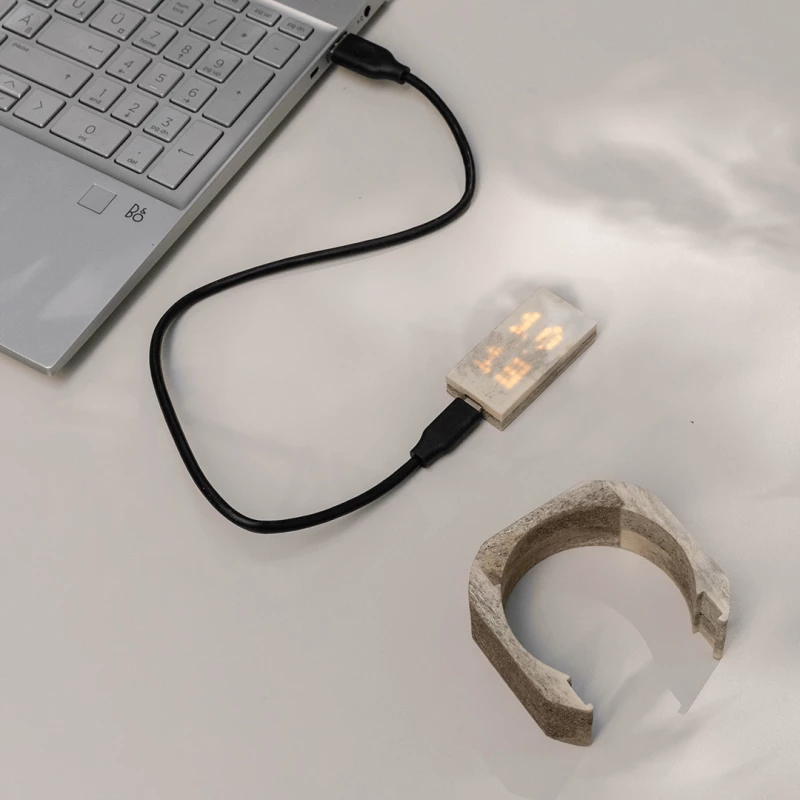
OSSO explores how uniqueness can emerge through digital manufacturing tools. While CNC machining and G-code are based on precision, repetition, and standardized processes, pairing them with a natural material creates outcomes that can never be fully replicated. The digital wristwatch was CNC milled from naturally shed deer antler, a renewable material that deer regenerate and shed annually without harm. By combining machine-guided fabrication with hand-finishing techniques, the project investigates the relationship between organic irregularity and digital control.
The antler was selected not only for its visual qualities, but also for its material properties, including density, translucency, electrical insulation, and biocompatibility. Through the juxtaposition of a once-living material and digital data, OSSO aims to provoke discussion around the ethics, creativity, and future potential of animal-derived materials in design. At the same time, the project encourages reconsideration of local, naturally available resources within contemporary manufacturing practices and highlights collaboration between technological precision and craftsmanship.
DESIGNERS
DATES
VENUE
About the designer
Amália Gerstenkorn is a Hungarian designer currently studying in the Design MA programme at Moholy-Nagy University of Art and Design. She holds a BA in Digital Object Design, with a practice grounded in a maker-oriented approach to design and making.


Contact us
Gentler Futures Festival is a not-for-profit initiative by BY THE END OF MAY, a research and design studio exploring the roles of manufacturing and crafts in creating a (non-linear), (post-consumerism) and (anti-alienation) economy. If you are into open source design, distributed manufacturing, local making and regenerative materials, get in touch with us.
A project

Co-funded by

Official Partner

Institutional Partners


Academic Partner

International Partners
