BY THE END OF MAY
talk
Towards Ecosystem Regeneration: an(other) introduction
Opening the second edition of Gentler Futures Festival, this talk sets the tone for two days of conversations, provocations and collective imagination around the futures of design and our relationship with the living world.
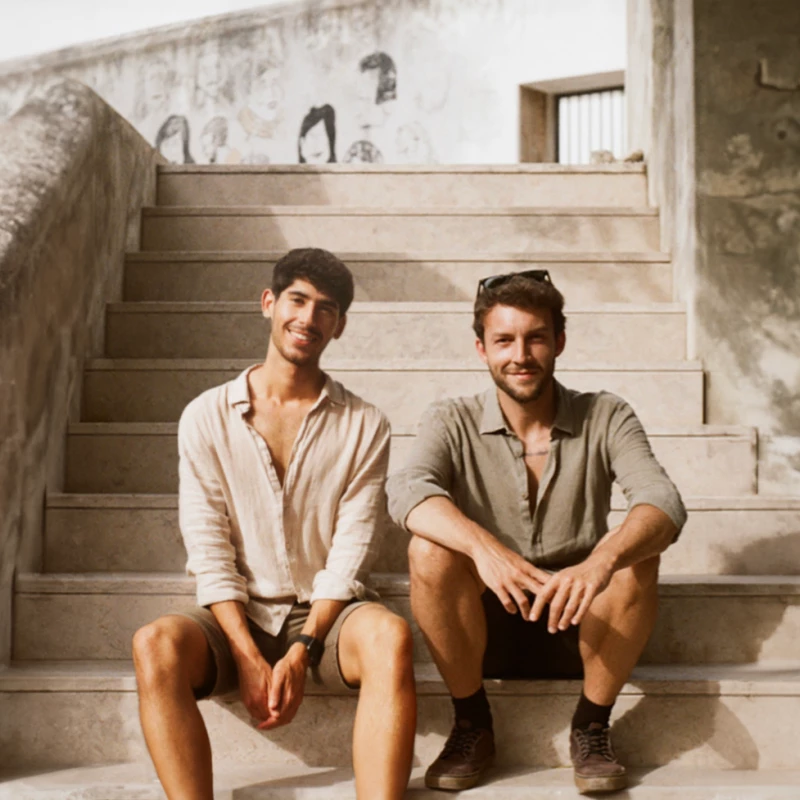
Drawing from the themes and questions shaping this year’s Festival, André Trindade and Davide Onestini reflect on how design might move beyond sustainability as damage control, towards practices that actively restore, nurture and participate in the flourishing of ecosystems. Rather than understanding Nature as a passive resource to extract from, optimise or aestheticise, this session invites us to consider what it means to work with (and for) the living systems that sustain us.
From interspecies collaboration and ecological intelligence, to spiritual ecology, indigenous knowledge and more-than-human perspectives, the talk explores how design can learn to listen, respond and coexist within larger ecological networks. How might we design with natural processes rather than against them? What would it mean to design for other species and forms of life, not only for human convenience or growth? And how might design evolve after recognising that humans are not at the centre, but one voice within a deeply interconnected planetary system?
Part introduction, part reflection, and part invitation, this opening talk proposes regeneration not simply as a technical challenge, but as a cultural, ethical and imaginative shift in how we relate to the Earth—and to each other.
SPEAKERS
DATES
VENUE
sharing circle
FUTURECASTING: a closing conversation on Gentler Futures
After two days of talks, workshops, installations, exhibitions, screenings and performances, Futurecasting: a closing conversation on Gentler Futures invites participants and guest projects to gather one last time to collectively reflect on what regeneration means.
This closing conversation unfolds as an open and participatory sharing circle, where audience and invited projects alike are invited to contribute experiences, doubts, provocations, hopes and imaginaries sparked throughout the Festival. Together, we will revisit the themes explored across the program—from more-than-human design and ecological restoration, to circular systems, community resilience, and regenerative technologies—to ask: what kind of futures are we actually trying to build?
How might regenerative societies look, feel and function? What values, relationships and systems would they require? And what role can design, culture, technology and collective action play in shaping them?
Conceived as a space for dialogue, listening and collective imagination, Futurecasting aims to transform reflection into shared vision—the beginning of a living manifesto for gentler, more regenerative ways of living.
MODERATED BY
DATES
VENUE
About the studio
BY THE END OF MAY is research and design studio exploring the future of manufacturing at the intersection of digital fabrication, biomaterials and crafts. The studio develops speculative projects empowering the transition to locally-productive, self-sufficient and regenerative cities.

Contact us
Gentler Futures Festival is a not-for-profit initiative by BY THE END OF MAY, a research and design studio exploring the roles of manufacturing and crafts in creating a (non-linear), (post-consumerism) and (anti-alienation) economy. If you are into open source design, distributed manufacturing, local making and regenerative materials, get in touch with us.
A project

Co-funded by
Official Partner

Institutional Partners


Academic Partner

International Partners
