Rita Gata Vilela
exhibition
From the Shell
The work presented is part of a Master’s thesis in Industrial and Product Design that explores the potential of food waste as a resource for new materials. The growing impact of non-renewable and non-biodegradable materials is driving the search for more sustainable solutions, while food waste is also becoming a growing concern, but both issues could be minimised by incorporating underutilised waste into alternative production systems. In Portugal, the chestnut industry has significant potential, producing around 25,000 tonnes per year, mainly in the Trás-os-Montes region, where a significant portion undergoes industrial processing, generating approximately 3,000 tonnes of waste. In Bragança, Sortegel, the country’s leading chestnut processing company, plays a key role in this sector (accounting for around 70% of all chestnuts processed nationally).
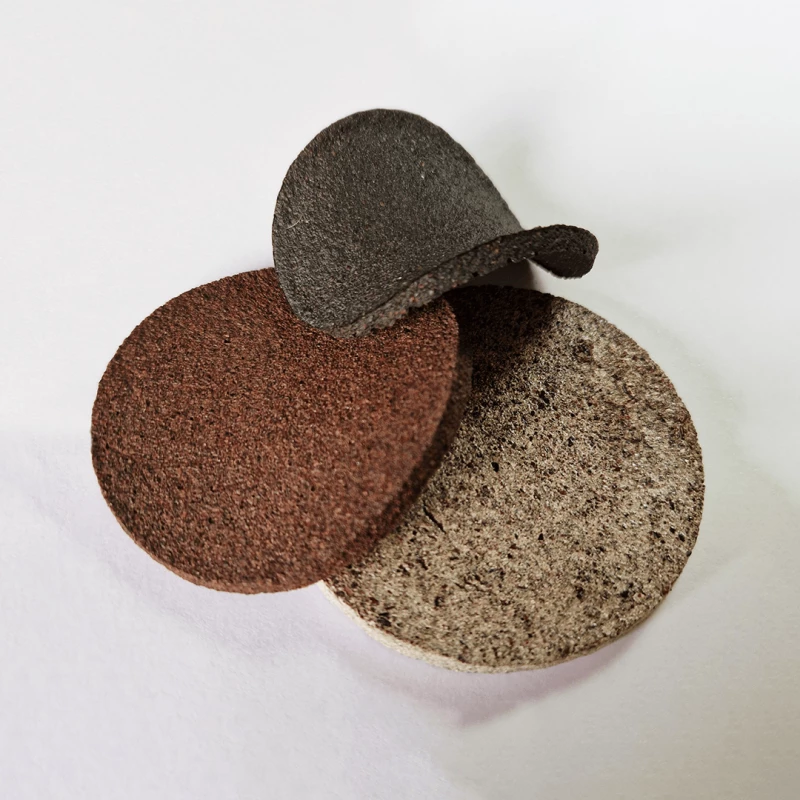
Within this context, agro-industrial chestnut waste supplied by Sortegel was selected as the focus of the practical component of the thesis. This practical component consists of the experimental development of biomaterials, combining processed waste (in powder form) with natural binders, and testing different mixtures with low-impact techniques. The resulting samples present a range of textures, structural behaviours, and aesthetic qualities, from rigid to flexible, highlighting the diversity of the results obtained and the material potential of this waste.
DESIGNER
DATES
VENUE
About the designer
Rita Gata Vilela is Master’s student in Industrial and Product Design at the Faculty of Fine Arts of the University of Porto, currently developing a thesis project focused on experimental biomaterials derived from chestnut processing waste and natural binders.


Contact us
Gentler Futures Festival is a not-for-profit initiative by BY THE END OF MAY, a research and design studio exploring the roles of manufacturing and crafts in creating a (non-linear), (post-consumerism) and (anti-alienation) economy. If you are into open source design, distributed manufacturing, local making and regenerative materials, get in touch with us.
A project

Co-funded by
Official Partner

Institutional Partners


Academic Partner

International Partners
